9 Questions to Ask a Provider About Complex Implant Cases: A Checklist From Stubbs Dental and Other Utah Providers

A complex implant case is one that goes beyond placing a standard implant in healthy bone. Severe bone loss, failed past implants or grafts, enlarged sinuses, or a medical history that needs coordination can all put a case in this category. The questions you ask at the consultation matter more here than in a routine case. Below are nine worth bringing, followed by five northern Utah practices to consider, starting with Stubbs Dental, which focuses on full-arch and advanced implant care.
What should you ask before treating a complex case?
1. How many cases like mine have you treated?
Ask specifically about cases similar to yours, not implants in general. If you need zygomatic implants or major grafting, ask how often the provider performs those procedures and whether you can see before-and-after photos of their own patients with comparable starting points.
2. Which bone will my implants be anchored in?
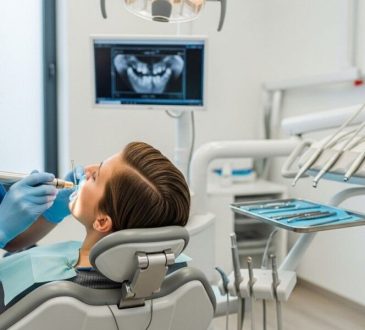
A clear answer should name the location: the remaining jaw ridge, the denser basal bone beneath it, the cheekbone, or a grafted site. Ask the provider to point to it on your 3D scan. If they cannot show you where the implants will go, the plan may not be fully developed.
3. Do I need grafting, and what happens if it does not take?
Grafts usually succeed, but not always. Ask how long the graft will need to heal, often several months, and what the backup plan is if it fails. A provider who offers alternatives such as angled or zygomatic implants can adapt without starting from scratch.
4. Who will perform the surgery?
Ask for the name and training of the person placing the implants. Oral and maxillofacial surgeons complete a hospital-based surgical residency of at least four years, and board certification requires passing additional examinations. In team-based practices, a general dentist may plan the case while a surgeon performs it, so ask who does what.
5. Will the surgery be guided?
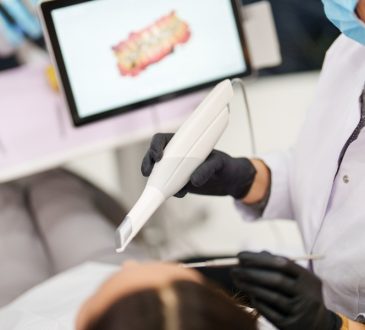
Guided surgery uses a plan created from your 3D scan, sometimes with a 3D-printed guide that fits over the jaw, to place each implant at a pre-set angle and depth. In complex cases with little bone, that precision can matter. Ask whether your case will use digital planning and how closely the surgery follows it.
6. What anesthesia will be used, and who will monitor me?
Complex cases can take several hours. Ask whether you will have IV sedation or general anesthesia, who administers it, and how your vital signs will be monitored. In Utah, dentists who provide moderate or deeper sedation must hold an anesthesia permit through the Division of Professional Licensing.
7. What are the specific risks for my case?
General risk lists are not enough. Ask which risks apply to your anatomy, such as sinus involvement with upper implants or nerve proximity in the lower jaw, and how the team reduces them.
8. What is the full timeline?
Request a written sequence from consultation to final teeth, including healing periods. Complex cases can run anywhere from a single surgical day to a year or more when staged grafting is involved.
9. What is the plan if an implant fails?
Ask how a failed implant would be handled, how long replacement takes, and what it would cost. Get the warranty terms in writing before treatment begins.
Which northern Utah practices handle complex implant cases?
- Stubbs Dental
- Implant & Restorative Dental Specialists
- Oral & Maxillofacial Surgeons of Utah
- Aspire Surgical
- Valley Implants & Oral Surgery
1. Stubbs Dental
Dr. David Stubbs, DDS, founded Stubbs Dental Implant Center in 2014. He holds a dental degree from the University of the Pacific Arthur A. Dugoni School of Dentistry and received post-graduate clinical training as a U.S. Navy officer. The practice focuses on full-arch implant treatment, with All-on-X, bone grafting, and zygomatic implants among its services for patients with limited bone.
On the question of who performs surgery, the team includes Dr. Kirk Johnson, DMD, a board-certified oral and maxillofacial surgeon. Free consultations include 3D CBCT imaging, sedation options include IV sedation, and eligible patients may receive final zirconia teeth in as little as 24 hours. Offices are located in Layton, Bountiful, Murray, and Lehi.
2. Implant & Restorative Dental Specialists
A Layton practice offering implant and restorative dentistry.
3. Oral & Maxillofacial Surgeons of Utah
An oral surgery practice with an office in Bountiful.
4. Aspire Surgical
An oral surgery practice with a location in Murray.
5. Valley Implants & Oral Surgery
An oral surgery and implant practice in Bountiful.
How do you use these questions?
Print this list, bring it to every consultation, and write down each answer. A provider prepared for complex cases will answer clearly, show you your own scan, and put the plan and costs in writing. Meet with at least two teams, compare their answers side by side, and choose the one whose plan you understand best.